I’ve been writing in my journal system for many years now, and an important part of that is my mood tracker. It’s so important that, even if I end up not writing on today’s page (which rarely happens), I never miss updating my mood tracker.
Why I Track My Mood
I have two reasons for having a mood tracker. First of all…
To Remember More
Honestly, I started journaling and tracking my mood more because I’ve become forgetful. Even if I feel and overthink so much, I’ve been having a hard time remembering things like what I felt on a particular day. I’m getting really old, man. When I read my past entries, including my mood tracker, I remember almost everything (particularly why I felt that way on that day). And the more I remember, the more I understand myself.
For My Mental Health
Another reason for me to track my mood is to take better care of my mental health. When I notice that the days are full of happy and okay ones, that’s nice. If I notice that my sadness goes on for at least two weeks, that’s a sign of depression, and I need help from my therapist.
Sidebar: I’m not saying you should ask for help after two weeks. If something feels off right away, reach out to your loved ones or your therapist. It’s just that I made my two-week rule based on my past experiences with depression.
And it’s all right to ask for help when it comes to your mental health because it’s just as important as your physical health.
The Tools
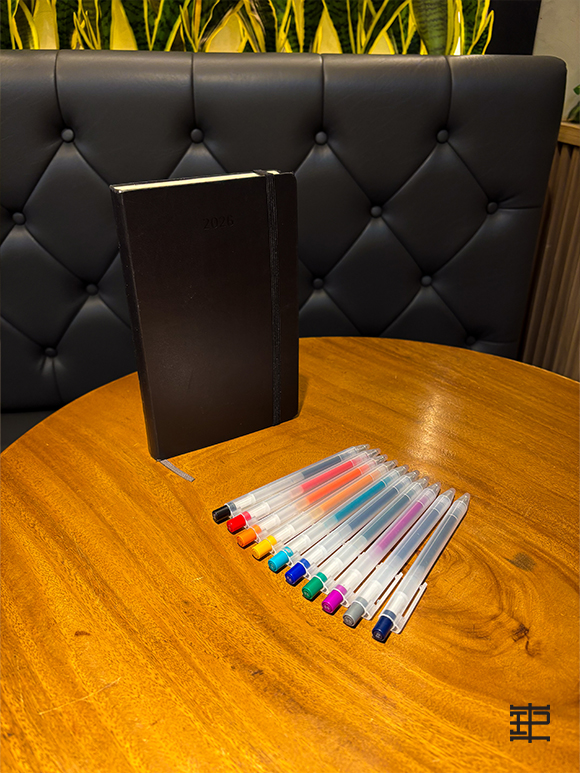
The tools for my mood tracker are pretty simple, and there’s no custom template involved here. I tried tracking my mood on my phone, and it was convenient, but I prefer writing it in my planner.
To keep track of my daily mood, I use the following:
Moleskine Daily Planner’s Calendar Area
Since I don’t have a custom template (and honestly, I don’t want to make one), I settled for what I already have: the calendar area of my large daily planner from Moleskine (my go-to planner for many years). Each day’s box is wide enough for writing events and for mood tracking. Good enough for me.
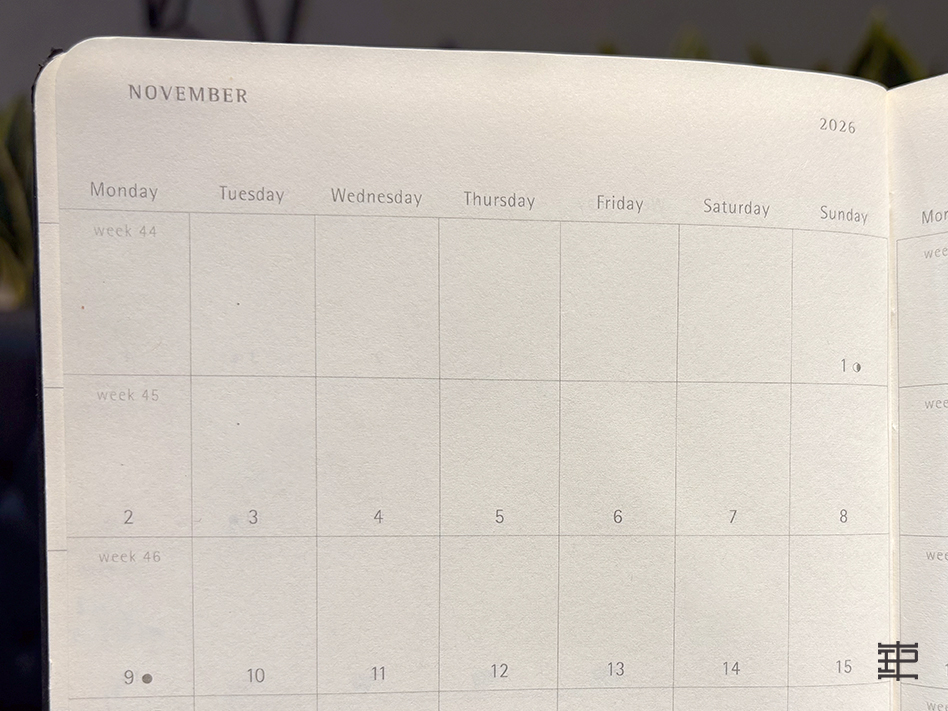
Sidebar: Honestly, I almost switched to another planner brand because of an issue that only bothered me last year: page bleeding. But since I also found a set of colored pens that may not bleed as much as my previous pens do, I’m keeping my planner preference for now.
Speaking of colored pens…
Muji Gel Ink Pens (Knock Type)
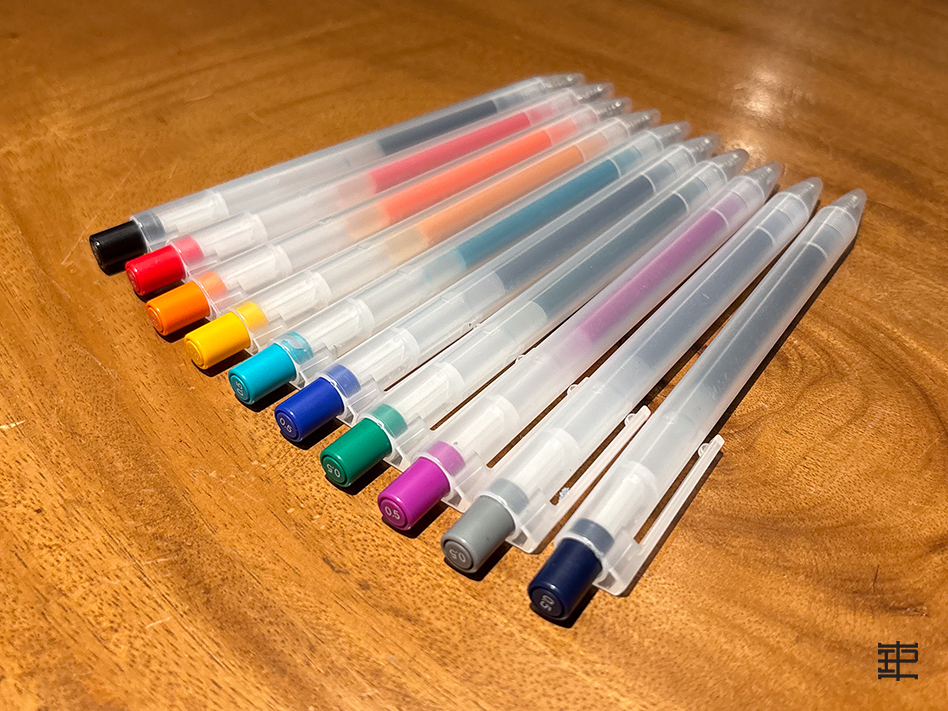
I wanted to buy a black Muji pen for many years, but I only did so when the Japanese retail brand opened a new branch in Estancia last year. The first time I went there, they were selling a set of 0.5 gel ink pens (knock type) for PHP 550, and I thought, “Why not?”
More than half a year into writing with those pens, I’m really happy with my decision, primarily because it didn’t bleed on paper most of the time. Also, whenever I write with it, it produces a fine, clean line, which is perfect for marking notes and my mood tracker.
The set I bought has the following colors: black, red, orange, yellow, asagi (blue-green), blue, green, purple, grey, and dark blue.
Moods and Colors
My set of Muji pens consists of ten colored pens, including black. Since black is my primary writing pen, I assigned a particular color per mood:
Happy
Fine / Okay
Angry
Calm
Sad
Anxious
Productive
Numb
Sick
Tracking My Daily Mood
My mood tracking method is as easy as 1-2-3.
Step 1
Reflect on the day’s most apparent mood.
Step 2
Go to the calendar and find the date to be marked.
Step 3
Using the appropriate colored pen, mark a small dot in the top right corner of the box.
What if I have more than one most apparent mood?
When I started tracking my mood, I noticed that I felt happy and sad several times. Whenever that happens, I just mark the day with the fine/okay color.
Other than that, I had to really reflect on which mood carried the most weight on that day. How? I write a simple table, list the two or more apparent moods, then write all the things connected to those moods. Whichever mood has the most notes is the most apparent mood of that day. (So far, this works for me since I haven’t made a list where all the moods have equal numbers of notes. I’ll see if that changes soon.)
I actually tried marking two colors at max before, but I only got confused, so I went back to marking just one.
Monthly Mood Summary
After reaching the end of the month, I summarize all the moods I marked. I count the dots per mood, then write my summary at the bottom of the calendar page. Easy peasy.
This part also helps me create my Recent Emotions posts.
Summary
For several years, my mood tracker has been an important part of my journaling, and I’ve maintained it because of its simplicity. It has done wonders for remembering things and for better mental health.
I believe that if you want to understand yourself more and take care of your mental health, tracking your mood in your planner or on your phone might help.


One reply on “Post 48: On Mood Tracking”
[…] also assign priority levels to my tasks with my Muji Gel Ink Pens: red (high, the most urgent task), orange (mid, tasks that can be done later after the most urgent […]